The price of hearing
The $3,000 was never the hearing aid
The device used to come bundled with the only channel allowed to sell it. The FDA unbundled them in 2022. Here is what changed, and what did not.
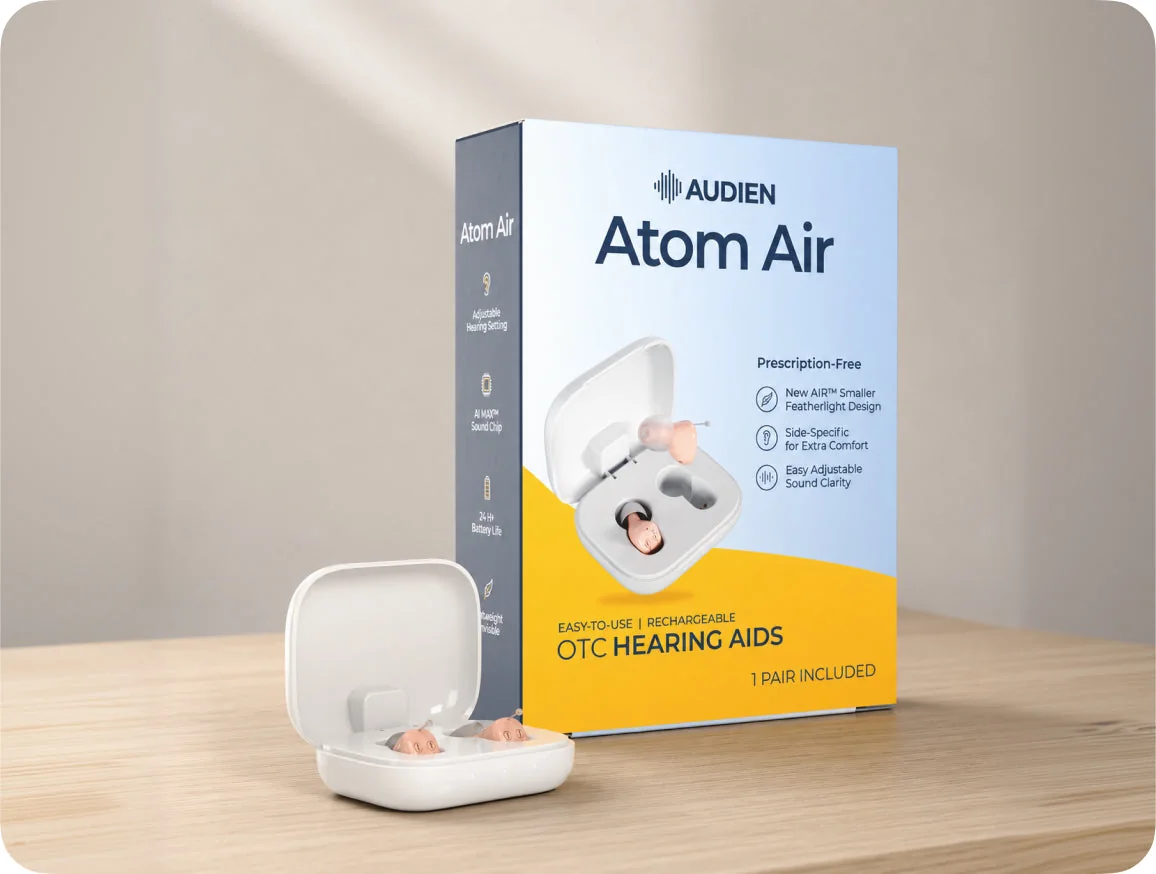
If you have priced hearing aids in the last decade, you probably remember two numbers and one room. The numbers were somewhere between three and five thousand dollars. The room was a waiting room, with a clipboard, and a follow-up appointment that had to be booked before you left.
Most people who walk away at that point tell themselves the same thing: the technology must be extraordinarily expensive. Tiny, medical, precise. Of course it costs as much as a used car.
That was never really the reason. The price of a hearing aid in the United States was, for a long time, the price of a bundle, and most of the bundle was not the hearing aid. Understanding what was actually in that bundle is the fastest way to understand why a pair now sells for $149 with no appointment at all, and, just as importantly, when the $149 version is the wrong thing to buy.
01 The bundleWhat the three thousand dollars was actually buying
Until October 2022, there was only one legal category of hearing aid in the United States. The FDA's own language for it survives to this day, and it is worth reading slowly:
A prescription hearing aid is any hearing aid that is not an OTC hearing aid. Prescription hearing aids are only available through a licensed hearing health care professional who can program the device to your unique level of hearing loss. U.S. Food and Drug Administration, OTC Hearing Aids: What You Should Know
Read that as a business model rather than a regulation and the price stops being mysterious. If a device can only reach a buyer through a licensed professional, then every device sold has to carry the cost of that professional: the office, the sound booth, the appointment, the fitting, the programming session, the follow-up visits, the staff who book them. Those things are real, they have real value for some people, and they were never optional. They were welded to the device.
So the sticker was one number for two very different things. You could not buy the amplifier without buying the clinic, in the same way you could not once buy an airline seat without buying a travel agent.
What you were told you were buying
A tiny medical device
Miniaturised electronics, precision moulding, medical-grade everything. Expensive by nature.
What the price actually covered
A device and a channel
The office, the booth, the appointment, the fitting session, the follow-ups and the staff who booked them. Welded to the device, priced as one thing.
You do not have to take an outsider's word for what that did to people at the counter. Audien's own head of audiology describes the same thing from the other side of the desk, on the company's About page:
As an audiologist, I often had to turn patients away because they couldn't afford prescription products. I knew that OTC devices could benefit many of them, yet I wasn't allowed to recommend those options. Dr. Rachel Trinker, Head of Audiology at Audien Hearing, quoted on audienhearing.com/pages/about-us
That is the whole problem in two sentences. Not a technology gap. A permission gap.
The same device, two routes to your ear
The old routeStill exists, still the right answer for some people. It is now a choice rather than a toll gate.
The new routeSame regulated device class, minus the steps you may not need. That subtraction is the discount.
October 17, 2022
On that date a new FDA category came into force. In the agency's words, it covers adults 18 years of age and older with perceived mild to moderate hearing loss, and it works like this:
You can buy OTC hearing aids in person at a store or through an online retailer without the need for a medical exam, prescription, or a fitting adjustment by an audiologist. U.S. Food and Drug Administration, OTC Hearing Aids: What You Should Know
Three words in that sentence do the work. Exam. Prescription. Fitting. Those were the three gates, and the rule removed all three at once for one specific group of buyers. It did not make hearing aids less regulated: an OTC hearing aid is still a medical device, still subject to FDA requirements, still bound by what has to be printed on the box. What changed is who is allowed to hand it to you.
All three figures from the FDA page cited above. The agency's exact phrasing is "close to 30 million adults living in the U.S. have some degree of hearing loss" and "only about one-fifth of those who could benefit from a hearing aid seek intervention."
That second number is the one worth sitting with. Four out of five people who would be helped by a hearing aid do not have one. Price is not the only reason, but for decades it was the first one anybody mentioned.
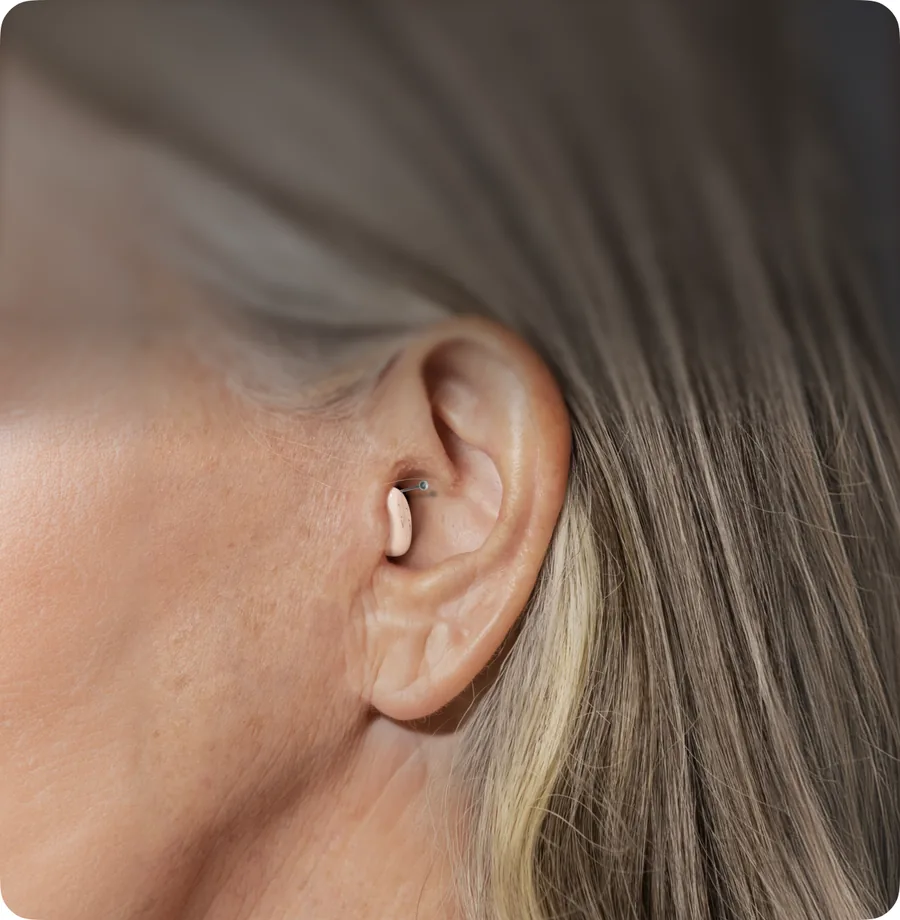
You can see the unbundling in the least glamorous way possible: on a shelf. Audien lists Walgreens, Target, Walmart, CVS, BJ's, Staples and Giant Eagle among its retailers, and its own company timeline dates the nationwide Walmart launch to October 2023. A product that once required an appointment now sits between the reading glasses and the blood pressure cuffs.
03 The limitsWhat the rule does not do
This is the part most articles about cheap hearing aids skip, and it is the part that decides whether you waste your money. The FDA requires specific wording on the outside of every OTC hearing aid box, precisely so that you can check yourself against it before you pay. Here it is, in the agency's own words.
Required on the outside of every OTC box
Signs of perceived mild to moderate hearing loss
- You have trouble hearing speech in noisy places
- You find it hard to follow speech in groups
- You have trouble hearing on the phone
- Listening makes you tired
- You need to turn up the volume on the TV or radio, and other people complain it's too loud
When to see a hearing healthcare professional instead
- You can't hear speech even if the room is quiet
- You don't hear loud sounds well, for example, you don't hear loud music, power tools, engines, or other very noisy things
- If this hearing aid does not help you enough, ask for help from a hearing healthcare professional
Both lists are reproduced from the FDA's summary of the labeling required on OTC hearing aid packaging. The box must also carry a warning against use by anyone younger than 18, for whom hearing aids remain prescription only. The agency states plainly that OTC hearing aids are "intended only for perceived mild to moderate hearing loss, and NOT for the treatment of severe or profound hearing loss," because they are limited in their maximum output.
Two honest consequences follow from that box.
The first: if your list is the top list, the $149 route was built for you, and the three thousand dollar route was charging you for services you were unlikely to need. The second: if your list is the bottom list, no amount of price advantage helps. A device with a capped output cannot solve a problem that needs more output, and buying one anyway just costs you 45 days and your patience. Audien itself frames the Atom Air as built for mild to moderate hearing needs, which is the same boundary drawn from the other direction.
There is also a middle case worth naming. Sudden hearing loss in one ear, pain, drainage, ringing that appeared out of nowhere: those are reasons to see a doctor rather than to shop, whatever the price. An amplifier does not investigate a cause.
04 The objectSo what does $149 actually get you
Once the exam, the fitting and the follow-up schedule come out of the price, what is left is the manufacturing, the tuning work done once for everybody instead of once per customer, and the box. Audien's newest model is the clearest example of the new arithmetic, and it is the product behind the ad that most likely brought you here.
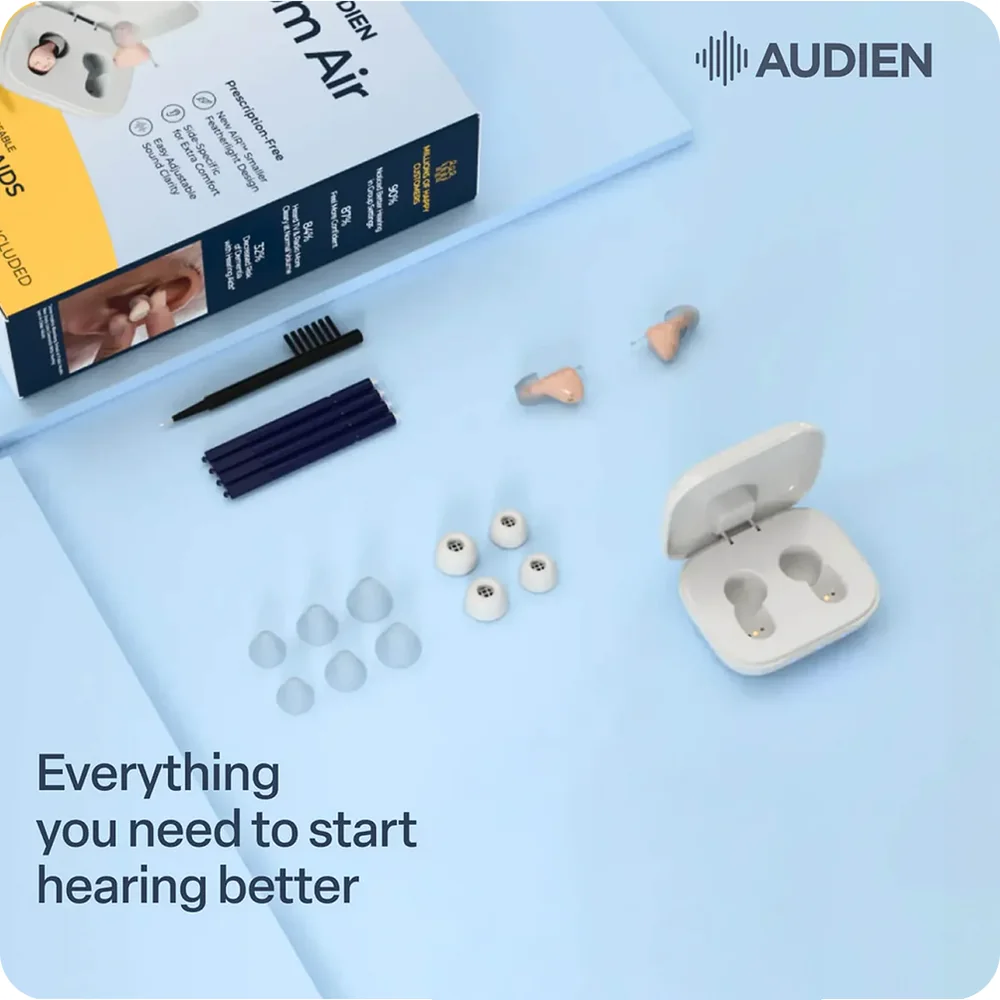
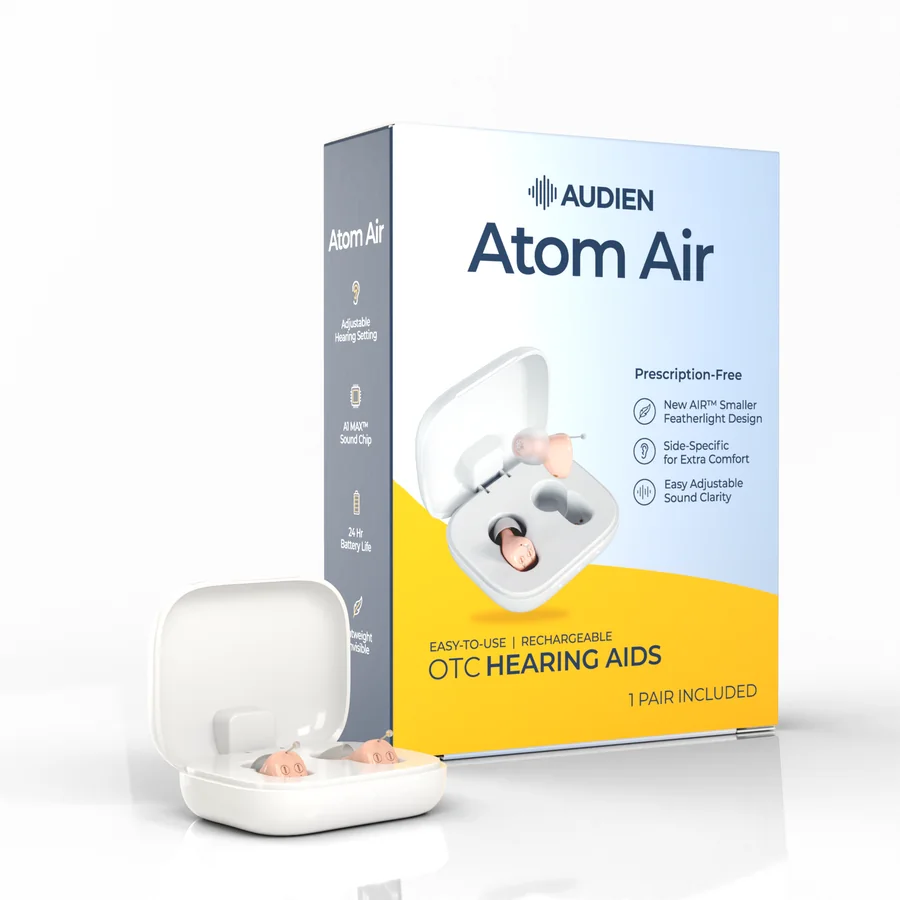
- A1 MAX sound chip. Audien's description: amplifies the voices in front of you, quiets the noise around you.
- 24-hour battery life, with the case recharging in roughly four to six hours according to their FAQ.
- No app needed. Nothing to pair, nothing to install, controls on the device.
- Pre-tuned by audiologists and ready out of the box, which is the step the old bundle charged an appointment for.
- FDA registered over-the-counter hearing aids, which Audien is careful to distinguish from personal sound amplifiers.
- 45-day risk-free trial, free return by mail, which is the closest thing to a fitting appointment that a direct model can offer.
Every specification above is reproduced from Audien's own Atom Air product page as published on August 13, 2026.
See the Atom Air on Audien's site$149 a pair · 45-day risk-free trial · free shippingAudien's own side-by-side
The company publishes its own comparison against the traditional route. It is a marketer's table, so treat the left column as a claim rather than as a finding, but every row in it maps onto a piece of the bundle that came out.
| Compared on | Audien | Traditional hearing aids |
|---|---|---|
| Price | $149 | $3,000 to $5,000 |
| Prescription | Not required | Required |
| FDA registered | Yes | Yes |
| Rechargeable | Yes | Varies |
| Risk-free trial | 45 days | Depends on clinic |
| Specialist support | Lifetime | In-clinic only |
| Delivered to you | Yes | No |
Reproduced from Audien's published comparison on the Atom Air product page. The "FDA registered" row has been corrected to reflect that prescription hearing aids are regulated devices too; the original graphic marks that row against the traditional column.
05 The ladderWhere $149 sits, and where it stops
A single price is a bad way to think about this category, because the unbundling did not produce one cheap product. It produced a ladder. The bottom of the ladder is what a hearing aid costs when you strip out everything except the device. The top of Audien's own range is still less than a fifth of the traditional figure they quote.
Audien's published prices, per pair
Every price below is listed on audienhearing.com today. The last bar is the traditional figure Audien itself quotes on the Atom Air page.
Bars scaled against $5,000. Prices read from audienhearing.com on August 13, 2026 and subject to change.
What you buy as you climb is not more amplification. It is more control. The Atom Air keeps its controls on the device. The Atom X moves them onto a touchscreen built into the charging case, which Audien describes as the world's first hearing aid with a touchscreen, for people who do not want to learn an app. The ION line goes behind the ear, with app control and multiple environment modes.
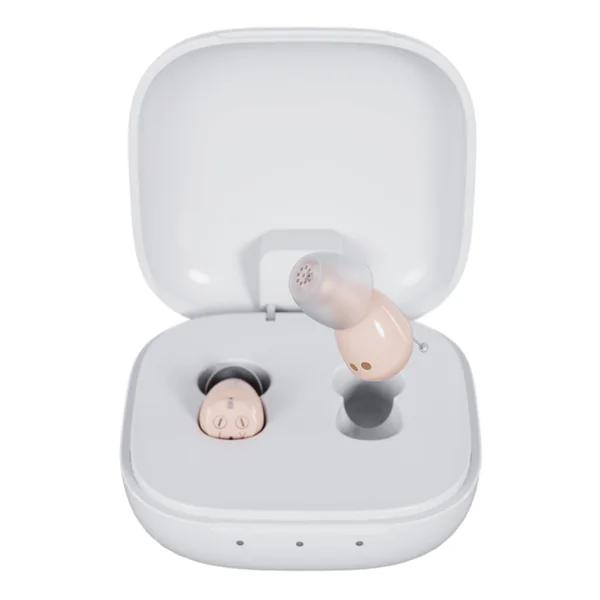 Atom One$98 · the floor of the ladder, in the ear, nearly invisible
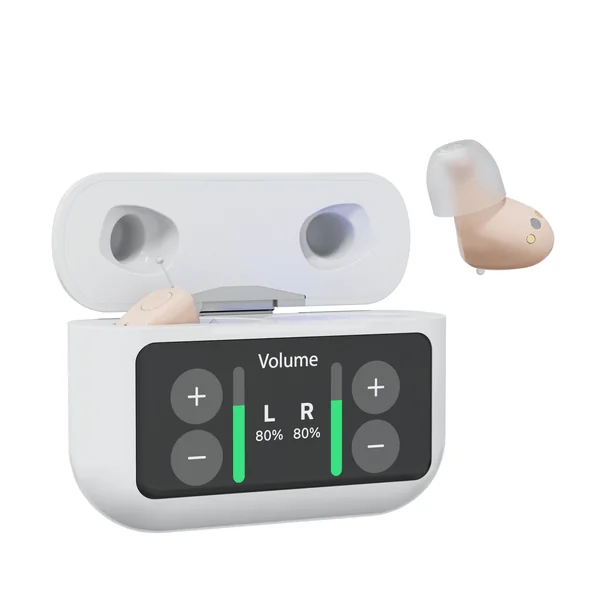 Atom X$389 · touchscreen on the case, four modes, Bluetooth
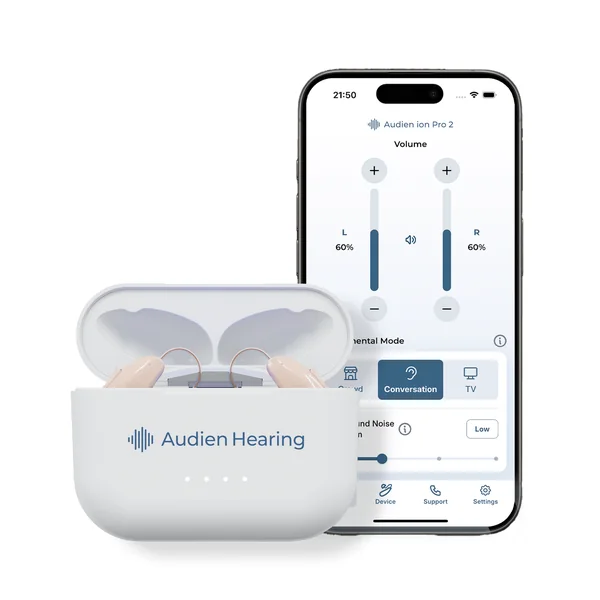 ION Pro 2$689 · behind the ear, app control, six hearing profiles
Three rungs of the same ladder, on Audien's site. Every one of them is an over-the-counter device sold without an exam.
Start here if
Nothing to learn
You want the thing to work in the car, at the table and in front of the television, and you have no interest in settings. Atom One or Atom Air.
Climb if
You want to tune it
Noisy restaurants, group meetings, Bluetooth streaming for calls and television. Atom X or the ION line.
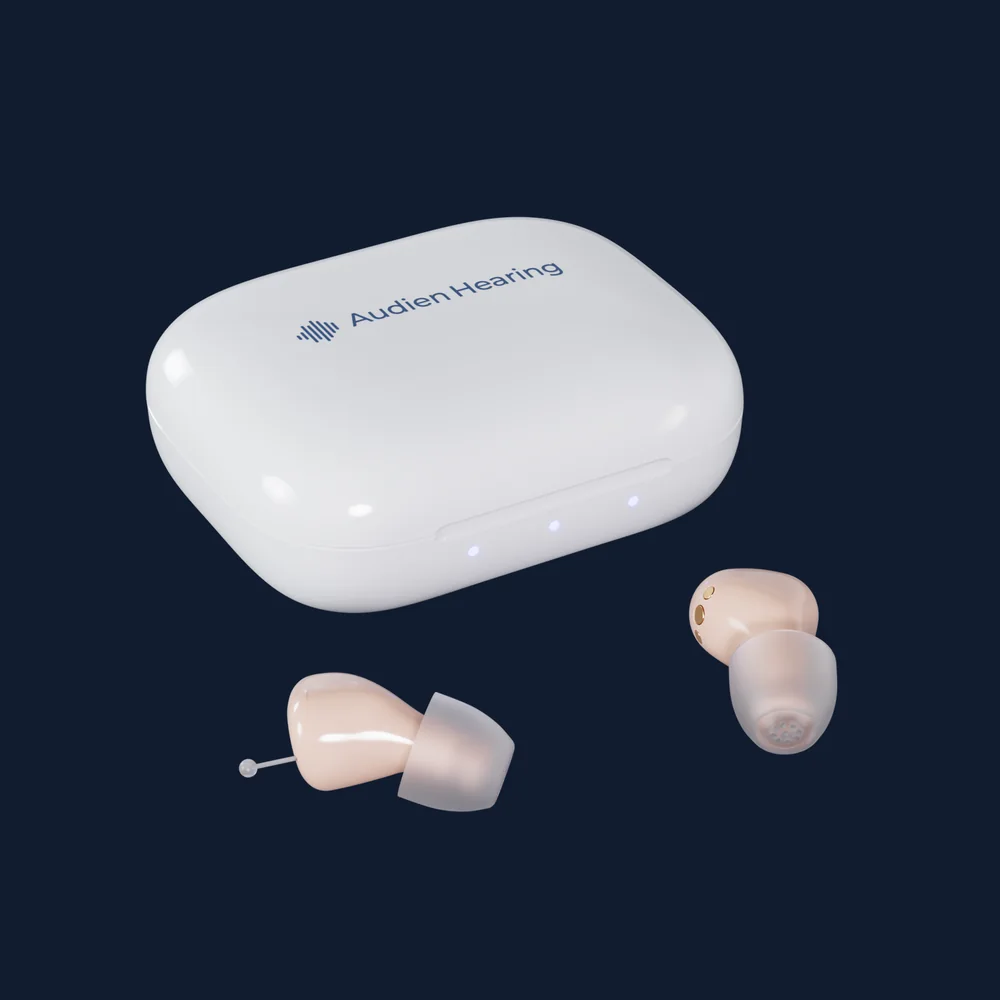
What happens after you pay
Here is the fair objection to everything above. The three thousand dollar bundle was not pure margin. Some of it bought a person: someone who put the device in your ear, checked the fit, adjusted the settings when the world sounded like a tin can, and told you that the first week always feels strange. Strip that out and plenty of people give up on day three with a drawer full of expensive plastic.
The direct model's answer is to keep the person and drop the building. Audien includes one complimentary 30-minute session with a certified hearing specialist with the Atom Air, held over video, and prices additional follow-ups at $100 each or bundles them into its AudienCare subscription. The 45-day window is the second half of that answer: it is a return policy doing the job a fitting appointment used to do.
★★★★★
I am totally impressed with the hearing aids and the exceptional customer support. When I purchased, it came with a complementary appointment with them to go over everything about the hearing aids and how they work and what to do, with tips.
jm, July 31, 2026 · Atom XVerified
Two things in that review are worth noticing. The appointment happened, and it happened after the purchase rather than before it. That is the entire structural difference between the two routes, described by somebody who was not trying to describe it.

The thing people actually worry about
Ask anybody who has put off buying hearing aids and the price comes out first. Wait a beat and something else usually follows: they do not want to be seen wearing them. That is not vanity, and it is not a small variable. It is the reason a device can sit in a drawer for a year.
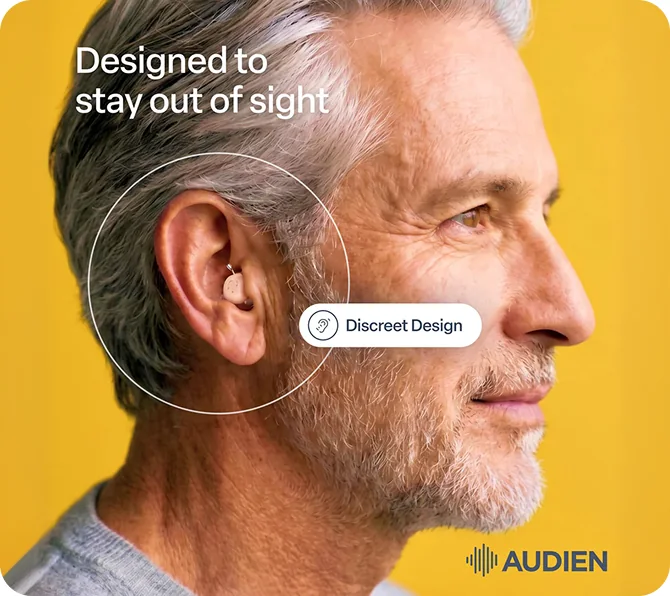
The in-the-ear format that the OTC category made commercially viable happens to answer that objection almost by accident. The devices are small because they have to fit the canal, and they sit inside the ear rather than behind it. Audien calls the design goal exactly what it is.

★★★★★
I love them! They are easy to use and comfortable in my ears. I wish I had these years ago. Can you see them in my ear? I can't.
Robert M., March 14, 2025 · Atom Pro 2
"I wish I had these years ago" is the sentence that should worry anybody still doing the maths. The cost of waiting is not measured in dollars.
08 The recordWhat buyers say when nobody is selling
Reviews from a brand's own site are not neutral evidence, and they should not be read as if they were. What they are useful for is the shape of the complaint and the shape of the relief: which objection keeps coming back, and what people mention first when it works. Every quote below is published publicly by Audien.
★★★★★
I had previously always believed that it was necessary to shell out thousands of dollars to obtain high quality hearing aids. Was I ever wrong!
John H., April 10, 2025 · Atom Pro 2

★★★★★
I used to dread spending time with my grandchildren because I couldn't hear them properly. But now, thanks to Audien, I can hear their giggles & laughter as clear as bell!
Rebecca L. · Atom Pro 2Verified
★★★★★
I'm able to hear sounds I haven't noticed in years. Conversations have been clearer, tv doesn't have to blare.
Bill D., July 5, 2025 · Atom 2Verified

★★★★★
Dad is happy with his new hearing aids and everyone in our family is happy too. He can hear well and enjoy conversations and talk on the telephone again.
Amy P., April 18, 2025
And the counterweight, from a reviewer who left five stars anyway:
★★★★★
They take getting used to, but my husband is excited to be able to hear better and he had his call with a specialist today.
Catherine, August 13, 2026 · Atom XVerified
They take getting used to. That is the honest headline for every hearing aid ever made, at any price. Your own voice sounds wrong for a few days. Cutlery is suddenly loud. The 45-day window exists because that adjustment is normal and because some people, at the end of it, decide it is not for them.

Who built the $149 version
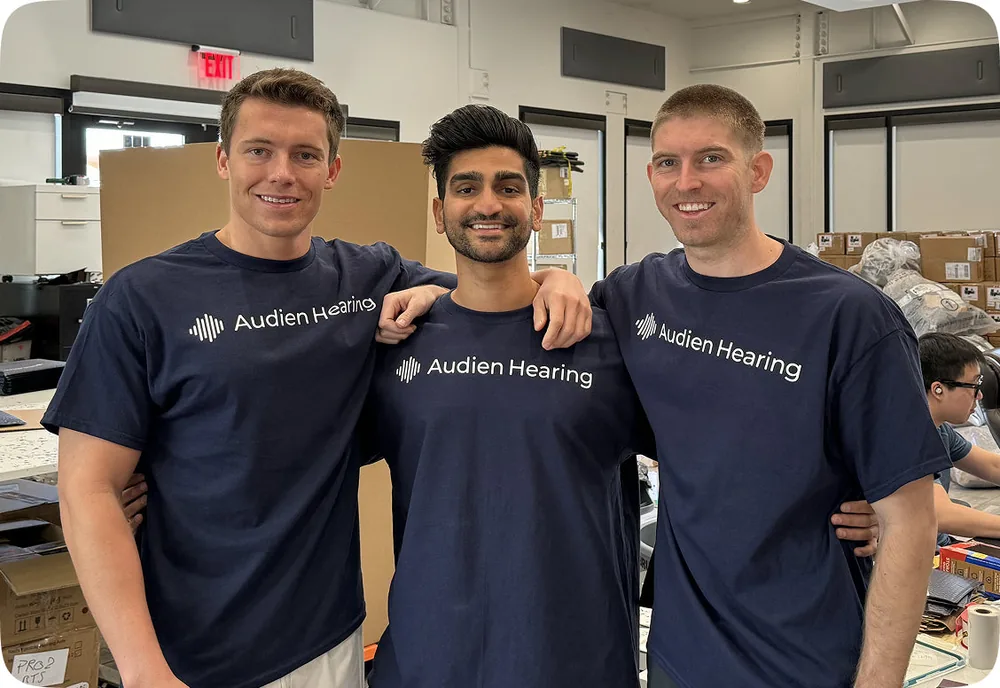
Audien was founded in Arizona in October 2019 by three people who, on the company's telling, had the same thing in common: grandparents who struggled to hear and who had been quoted prices they would not pay. A US patent for the Atom design followed in August 2021. The FDA opened the OTC category in October 2022. In October 2023 Audien says it became the first OTC hearing aid to launch nationwide in Walmart.
How a $149 hearing aid became legal to sell
- October 2019Audien founded in Arizona by three people whose grandparents had struggled to hear.
- August 2021US patent awarded for the Atom design. Still no legal way to sell it without a professional.
- October 17, 2022The FDA's over-the-counter category comes into force. The exam, the prescription and the fitting stop being compulsory.
- October 2023Audien says it becomes the first OTC hearing aid to launch nationwide in Walmart.
Dates for 2019, 2021 and 2023 are from Audien's own company timeline. The 2022 date is the FDA's.
The sequence matters more than the story. A company that started building a direct-to-consumer hearing aid in 2019 was building for a category that did not legally exist yet in the form it takes today. When the rule landed, the product was already there. That is why the price moved in 2022 and not in 2032.
Where you can buy one without an appointment
WalgreensTargetWalmartCVSBJ'sStaplesGiant Eagle
Those are the retail partners Audien lists, alongside its own site. FSA and HSA cards are accepted at checkout; the company states plainly that these devices are not covered by insurance.
If you are going to try it, try it properly
The old route made you decide before you could hear anything. You paid, then you found out. The new route inverts that, and the only way to use the inversion is to actually use it.
- Check yourself against the box, not against the price. The FDA's two lists above take thirty seconds and will tell you whether the $149 route is even the right shelf.
- Wear them for more than a weekend. The adjustment period is real and the trial is 45 days for a reason. Reviewers who quit in week one and reviewers who are still wearing them a year later describe the same first three days.
- Take the included specialist session. It is the closest thing the direct model has to a fitting, it is already paid for, and the people who mention it in reviews are noticeably happier than the people who do not.
- Try the domes. Several sizes ship in the box. Most complaints about comfort and about sound are complaints about fit.
- If the bottom list on the FDA label describes you, spend the appointment money. An over-the-counter device is capped by design. That cap is a safety feature, not a flaw, and no discount makes it go away.

Three thousand dollars bought a device and a channel. The channel is now optional. If the top list on that FDA label reads like a description of your last dinner party, the arithmetic that kept you out of the market for years has quietly changed, and it costs $149 and 45 days to find out whether it changed for you.
See the Atom Air on Audien's site$149 a pair · 45-day risk-free trial · complimentary specialist sessionPrefer to compare the range first? Audien's full over-the-counter line-up, from the $98 Atom One to the $689 ION Pro 2, is listed here. If you would rather see one in person before you buy, their store locator shows which nearby retailers carry them.
Questions people ask before they buy
Are these amplifiers?
No. Audien states that these are FDA registered over-the-counter hearing aids, and it draws the distinction with cheap amplifiers explicitly. Personal sound amplifiers are a different, unregulated category and are not intended for hearing loss.
Do I need a hearing test first?
Not to buy one. The FDA rule specifically removes the requirement for an exam, a prescription and a fitting for adults with perceived mild to moderate hearing loss. You can still have a test, and a professional can still sell you an OTC device if you want their input.
Is it covered by insurance?
Audien says no, but that FSA and HSA cards are accepted at checkout.
How long until they arrive?
Audien's FAQ says orders ship within 24 to 48 hours and typically arrive in three to five business days, with free shipping in the US.
What if they do not work for me?
The published policy is a 45-day risk-free trial with a free return by mail. That window is the whole point of the model, so use it rather than deciding on day two.